President Hakainde Hichilema was officially sworn in for a second term as Zambia's leader on Tuesday, but the ceremony was overshadowed by growing concerns over the country's recent election and the jailing of his main political rival. Hichilema secured victory in the August 13 presidential election, extending his leadership of the southern African nation. However, …
Zambia Election Turmoil Overshadows Hichilema’s Second-Term Swearing-In
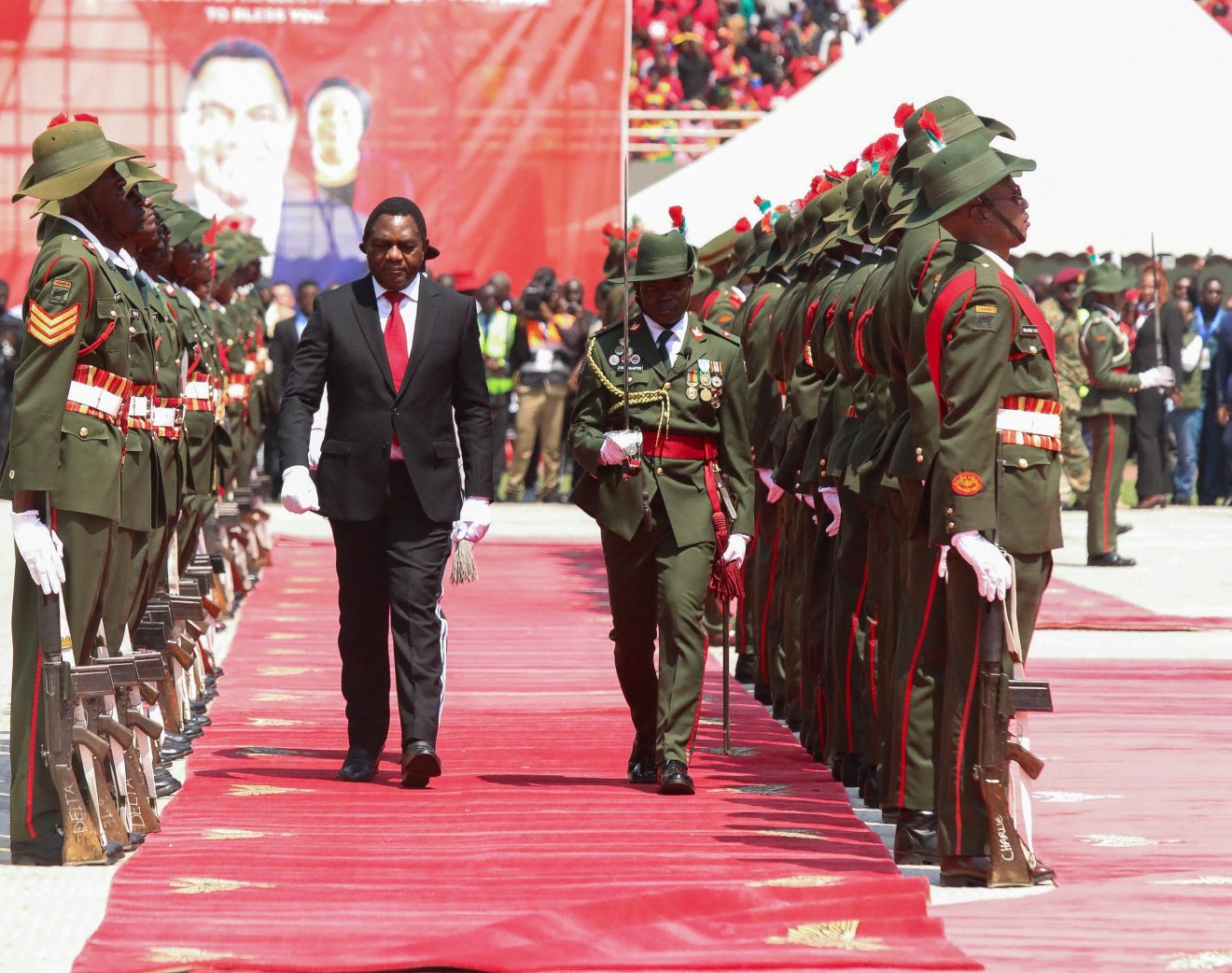
President Hakainde Hichilema was officially sworn in for a second term as Zambia’s leader on Tuesday, but the ceremony was overshadowed by growing concerns over the country’s recent election and the jailing of his main political rival.
Hichilema secured victory in the August 13 presidential election, extending his leadership of the southern African nation. However, the election process has attracted criticism from observers who reported a series of irregularities both during and after the vote.
The controversy deepened over the weekend when opposition candidate Brian Mundubile and his running mate Makebi Zulu were arrested and charged with treason. Their detention has sparked debate among political analysts and civil society groups, with critics warning that the developments could undermine Zambia’s democratic image.
Hichilema first came to power in 2021 on promises of strengthening democracy, protecting institutions, and ending what he described as political persecution under previous administrations. His victory at the time was widely seen as a milestone for democratic change in Zambia.
However, observers of the latest election have raised concerns about reported disruptions in vote counting, allegations of vote tally manipulation, the arrest of opposition lawmakers, and the deployment of security personnel at some polling and counting centres. Critics also questioned decisions that reportedly affected the operation of certain courts during the post-election period.
Despite the controversy, both the United States and China acknowledged Hichilema’s victory and sent representatives to attend the inauguration ceremony. Zambia remains strategically important due to its vast copper reserves and critical minerals, making it a key area of interest for global powers seeking access to resources essential for modern industries.
Political analysts warn that the handling of the election could have long-term consequences for Zambia’s democratic future. The country has maintained a record of regular elections since the 1990s, although many contests have faced criticism over transparency and fairness.
Historian Euston Chiputa described the recent events as one of the most challenging moments for Zambia’s democracy, citing confusion surrounding the vote-counting process, the presence of the military at counting centres, and the arrests of opposition figures.
As Hichilema begins his second term, attention is likely to remain focused not only on his economic agenda and governance plans but also on how his administration responds to concerns about democratic accountability and political freedoms.