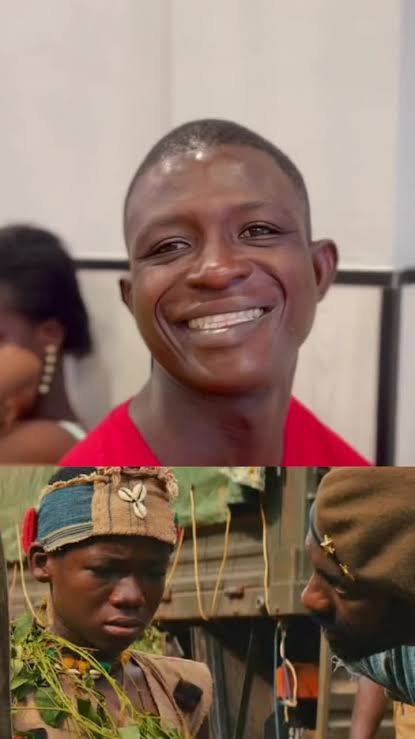
Ghanaian actor Emmanuel Nii Adom Quaye, popularly known as Strika, has returned to the public spotlight after a viral video appeared to show residents confronting the former Beasts of No Nation child actor over the alleged removal of metal railings from a pedestrian footbridge at Kwashieman in Accra. Multiple Ghanaian outlets reported that the footage began circulating on social media on Saturday, August 29, 2026.
Reports accompanying the footage allege that sections of metal railing were being removed from the public structure and were intended to be sold as scrap. However, the full circumstances surrounding the incident have not been independently established, and there was no confirmed public account of formal charges at the time of the latest reports reviewed by Trend Ghana.
Viral Footage Sparks Debate Across Ghana
The footage rapidly attracted attention because Strika’s name remains familiar to many Ghanaians following an extraordinary introduction to international cinema more than a decade ago. GhanaWeb reported that residents confronted the actor at the footbridge, while AdomOnline reported that a police officer later arrived and accompanied Strika for further investigation.
The reported incident has also raised concerns about the footbridge itself. Railings and other protective components of pedestrian bridges are designed to help keep users safe, meaning their removal can create risks beyond the value of the metal involved. Daily Guide reported that residents expressed concern specifically because the railings form part of infrastructure intended to protect pedestrians.
From Beasts of No Nation to International Recognition
Strika became widely known following an appearance in the acclaimed 2015 film Beasts of No Nation. The production brought the young performer international attention and placed Strika alongside internationally recognized performers including Idris Elba.
That early breakthrough is one reason the latest footage has generated considerably more attention than an ordinary allegation involving damage to public property. More than ten years after the film’s release, Strika’s journey continues to prompt questions about what happens to young performers after sudden international exposure fades.
Earlier Security Guard Footage Resurfaces
The controversy has also brought renewed attention to an older video reportedly showing Strika working as a security guard at Memo Shopping Mall in Accra.
According to YEN.com.gh, the footage originally attracted attention in April 2026 and resurfaced following the Kwashieman incident. The outlet reported that Strika had been seen performing security duties at the shopping centre months before the latest controversy.
That development has added another dimension to the public conversation. Instead of focusing exclusively on the allegation, some observers are discussing the difficult transition that can occur when young performers experience major fame without developing a sustainable long-term career in entertainment.
Calls for Punishment Meet Calls for Compassion
Public reaction has been sharply divided.
Some social-media commentators have called for Strika to face the same legal process that would apply to anybody accused of damaging or taking public property. Ghanaian content creator Headless YouTuber, for example, publicly called for legal consequences following the allegation.
Others have focused more heavily on Strika’s circumstances and the wider question of whether Ghana’s entertainment industry provides adequate long-term guidance for young performers who experience fame at an early age. Coverage of the controversy has consequently moved beyond the alleged incident itself and into a broader discussion about mentorship, financial guidance and career development for emerging talent.
An Important Question for Ghana’s Creative Industry
Strika’s story presents an uncomfortable but important question for Ghana’s rapidly growing creative sector: what happens to young talent after the spotlight disappears?
Breaking into international entertainment can transform a young performer’s life, but early recognition does not automatically guarantee a stable career. Industry mentorship, education, financial management and long-term career planning can become particularly important when young performers suddenly receive national or international attention. The renewed discussion surrounding Strika illustrates why those support structures deserve greater attention.
At the same time, personal hardship does not settle the factual or legal questions surrounding the Kwashieman incident. Reports currently available do not establish a final legal outcome, and authorities had not publicly clarified whether formal charges had been filed in the reporting reviewed by Trend Ghana. The allegation should therefore remain described as an allegation unless authorities establish otherwise.
What Happens Next?
Attention will now turn to whether police or other authorities provide further information about what occurred at the Kwashieman footbridge.
Until then, the viral video has once again placed Strika at the centre of Ghana’s national conversation, but perhaps the bigger story extends beyond one former child actor.
It raises questions about protecting public infrastructure, treating allegations fairly, and building stronger systems to help talented young Ghanaians turn early opportunities into sustainable careers.
Trend Ghana Take
The Kwashieman controversy should not become an excuse for either instant condemnation or uncritical sympathy. The allegation deserves proper investigation, while Strika’s wider journey offers Ghana’s entertainment industry an opportunity to examine how young performers are supported long after the cameras stop rolling.